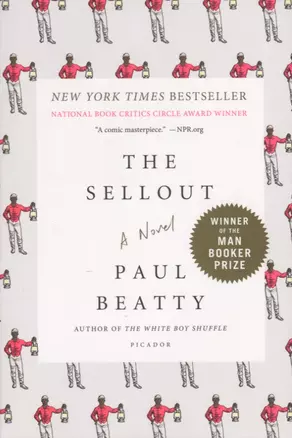
A biting satire about a young mans isolated upbringing and the race trial that sends him to the Supreme Court, Paul Beattys The Sellout showcases a comic genius at the top of his game. It challenges the sacred tenets of the United States Constitution, urban life, the civil rights movement, the father-son relationship, and the holy grail of racial equality: the black Chinese restaurant.
Born in the "agrarian ghetto" of Dickens - on the southern outskirts of Los Angeles - the narrator of Th
Born in the "agrarian ghetto" of Dickens - on the southern outskirts of Los Angeles - the narrator of Th
The Sellout
Этот товар закончился
Описание и характеристики
Born in the "agrarian ghetto" of Dickens - on the southern outskirts of Los Angeles - the narrator of The Sellout resigns himself to the fate of lower-middle-class Californians: "Id die in the same bedroom Id grown up in, looking up at the cracks in the stucco ceiling thatve been there since the 68 quake."
Raised by a single father, a controversial sociologist, he spent his childhood as the subject in racially charged psychological studies. He is led to believe that his fathers pioneering work will result in a memoir that will solve his familys financial woes. But when his father is killed in a police shoot-out, he realizes there never was a memoir. All thats left is the bill for a drive-thru funeral.
Fuelled by this deceit and the general disrepair of his hometown, the narrator sets out to right another wrong: Dickens has literally been removed from the map to save California from further embarrassment. Enlisting the help of the towns most famous resident - the last surviving Little Rascal, Hominy Jenkins - he initiates the most outrageous action conceivable: reinstating slavery and segregating the local high school, which lands him in the Supreme Court.
- Тип обложки Мягкий переплёт
- Кол-во стр. 291
- Вес 270 г
- Год издания 2016
- Издательство Picador
- Автор Paul Beatty
- Размер 2x13.8x20.7
- ID товара 2639398
- ISBN 978-1-25-008325-8, 978-1-250-08325-8