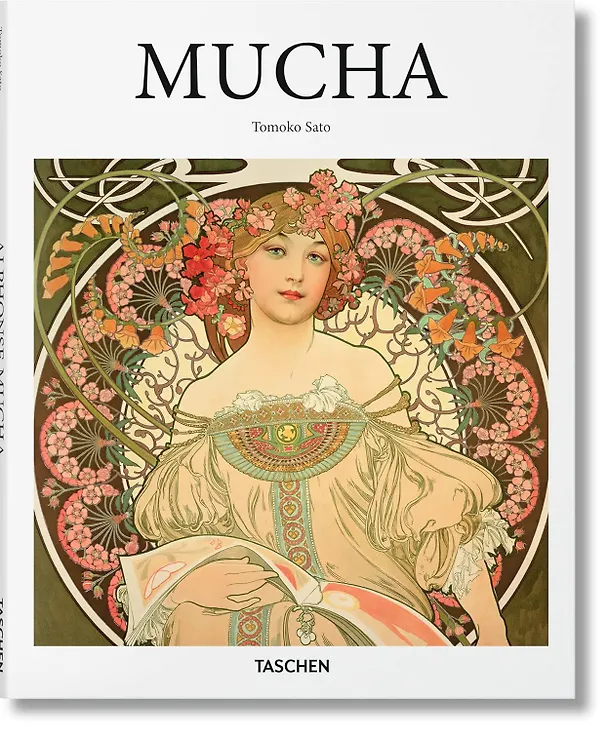
Mucha
Купили 11 человек
With his instantly recognizable decorative style, Czech artist and Art Nouveau master Alphonse Mucha (1860–1939) defined the look of the fin-de-siècle. In evocative shades of peach, gold, ochre, and olive, his seductive compositions of patterns, flowers, and beautiful women became paradigms of the Belle Époque years.Mucha’s work permeated illustration, posters, postcards, and the advertising designs of his day. His striking posters of star actress Sarah Bernhardt were particularly famous. Alongs
- Кол-во стр. 96
- Вес 600 г
- Год издания 2021
- Издательство
Отзывы
Отличная серия книг. Стоит чуть меньше чем более популярная библиотека, но содержит ничуть не меньше полезной информации и потрясающих иллюстраций. Подойдет отлично в качестве подарка, тем более, что приходит книга в фирменной запайке - пленке - гарантии того, что книга будет новая и без повреждений обложки и внутренней части. Советую также для домашней коллекции всем ценителям прекрасного
Описание и характеристики
Mucha’s work permeated illustration, posters, postcards, and the advertising designs of his day. His striking posters of star actress Sarah Bernhardt were particularly famous. Alongside this delicate decorative work, Mucha also harbored strongly felt political ideas. With his monumental cycle The Slav Epic, he expressed his staunch support for Pan-Slavism, promoting the political independence of the Czech and Slavic nations from the Austro-Hungarian Empire.
Compiled in association with the Mucha Foundation, this book presents key works and introduces the full reach of Mucha’s œuvre from patterned decoration to his book illustrations, posters, photographs and monumental paintings.
- Кол-во стр. 96
- Вес 600 г
- Год издания 2021
- Издательство
- Размеры в см 1.5x21.5x26.5
- ID товара 3029184
- ISBN 978-3-83-655009-3, 978-3-8365-5009-3