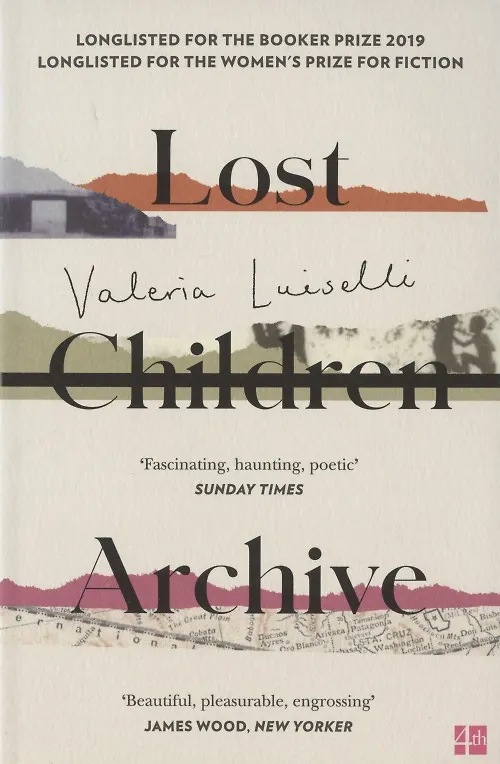
Lost Children Archive
Купили 8 человек
A family in New York packs the car and sets out on a road trip. A mother, a father, a boy and a girl, they head south west, to the Apacheria, the regions of the US which used to be Mexico. They drive for hours through desert and mountains. They stop at diners when theyre hungry and sleep in motels when it gets dark. The little girl tells surreal knock knock jokes and makes them all laugh. The little boy educates them all and corrects them when theyre wrong. The mother and the father are barely s
- Переплёт Мягкий
- Кол-во стр. 385
- Вес 280 г
- Год издания 2020
Отзывы
У меня смешанные чувства по поводу этой книги.
Мне понравилось многое, особенно размышления о документальных фильмах и сбор предметов, звуков, фотографий и записей. А также политическая подоплека, обличение того, как Трамп относится к иммигрантам и особенно к детям, обличение того, как первые американцы относились к коренным жителям. Мне больше понравилась первая часть книги (сродни дорожному роману), и меня тронуло самое последнее описание путешествия потерявшихся детей.
Но в целом книга показалась мне слишком неоднородной, а все литературные ссылки - слишком претенциозными.
Мне понравилось многое, особенно размышления о документальных фильмах и сбор предметов, звуков, фотографий и записей. А также политическая подоплека, обличение того, как Трамп относится к иммигрантам и особенно к детям, обличение того, как первые американцы относились к коренным жителям. Мне больше понравилась первая часть книги (сродни дорожному роману), и меня тронуло самое последнее описание путешествия потерявшихся детей.
Но в целом книга показалась мне слишком неоднородной, а все литературные ссылки - слишком претенциозными.
Описание и характеристики
Meanwhile, thousands of children are journeying north, travelling to the US border from Central America and Mexico. A grandmother or aunt has packed a backpack for them, putting in a bible, one toy, some clean underwear. They have been met by a coyote: a man who speaks to them roughly and frightens them. They cross a river on rubber tubing and walk for days, saving whatever food and water they can. Then they climb to the top of a train and travel precariously in the open container on top. Not all of them will make it to the border.
In a breath-taking feat of literary virtuosity, Lost Children Archive intertwines these two journeys to create a masterful novel full of echoes and reflections - a moving, powerful, urgent story about what it is to be human in an inhuman world.
- Переплёт Мягкий
- Кол-во стр. 385
- Вес 280 г
- Год издания 2020
- Издательство
- Размеры в см 2.4x12.8x19.7
- ID товара 2826359
- ISBN 978-0-00-829005-4