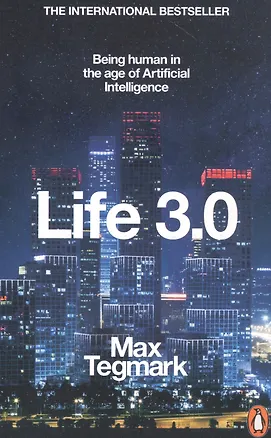
AI is the future - but what will that future look like? Will superhuman intelligence be our slave, or become our god?
Taking us to the heart of the latest thinking about AI, Max Tegmark, the MIT professor whose work has helped mainstream research on how to keep AI beneficial, separates myths from reality, utopias from dystopias, to explore the next phase of our existence.
How can we grow our prosperity through automation, without leaving people lacking income or purpose? How can we ensure
Taking us to the heart of the latest thinking about AI, Max Tegmark, the MIT professor whose work has helped mainstream research on how to keep AI beneficial, separates myths from reality, utopias from dystopias, to explore the next phase of our existence.
How can we grow our prosperity through automation, without leaving people lacking income or purpose? How can we ensure
Life 3.0
Этот товар закончился
Купили 4 человека
Описание и характеристики
Taking us to the heart of the latest thinking about AI, Max Tegmark, the MIT professor whose work has helped mainstream research on how to keep AI beneficial, separates myths from reality, utopias from dystopias, to explore the next phase of our existence.
How can we grow our prosperity through automation, without leaving people lacking income or purpose? How can we ensure that future AI systems do what we want without crashing, malfunctioning or getting hacked? Should we fear an arms race in lethal autonomous weapons? Will AI help life flourish as never before, or will machines eventually outsmart us at all tasks, and even, perhaps, replace us altogether?
- Тип обложки Мягкий переплёт
- Кол-во стр. 364
- Вес 280 г
- Год издания 2018
- Издательство Penguin Books
- Размер 2x13x19.7
- ID товара 2847268
- ISBN 978-0-14-198180-2
Отзывы
Хорошее введение в тему искусственного интеллекта
Крайне интересный обзор достижений в сфере ИИ от Макса Тегмарка. Автор не только теоретизирует на тему того, как будет развиваться ИИ и как это повлияет на нашу жизнь, но и дает достаточно подробный обзор (впечатляющих) достижений в данной сфере - со множеством конкретных примеров и ссылок. По данной теме легко уйти в общие рассуждения, однако это не случай Тегмарка. Книга наполнена графиками, иллюстрациями, ссылками на видео. При этом, все описано доступным языком.