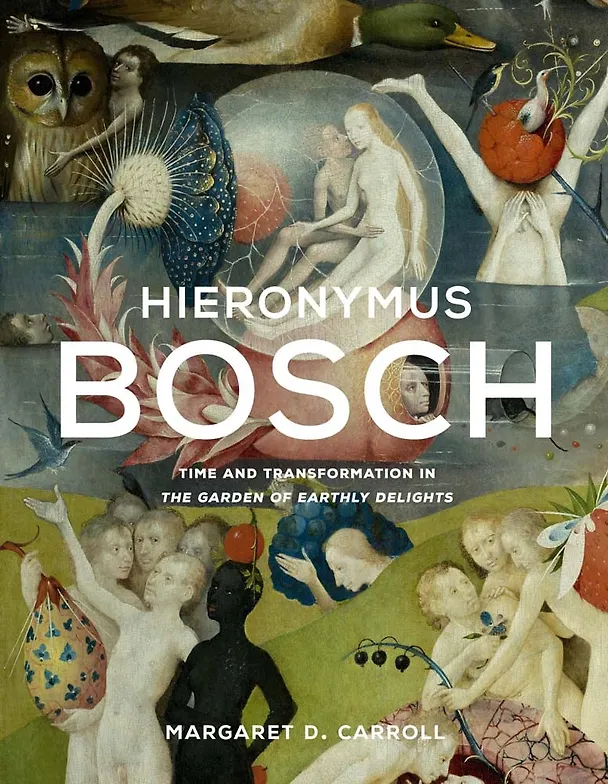
Hieronymus Bosch: Time and Transformation in The Garden of Earthly Delights
Купили 2 человека
A new and exciting interpretation of Bosch’s masterpiece, repositioning the triptych as a history of humanity and the natural world Hieronymus Bosch’s (c. 1450–1516) Garden of Earthly Delights has elicited a sense of wonder for centuries. Over ten feet long and seven feet tall, it demands that we step back to take it in, while its surface, intricately covered with fantastical creatures in dazzling detail, draws us closer. In this highly original reassessment, Margaret D. Carroll reads the Garden
- Кол-во стр. 177
- Вес 990 г
- Год издания 2022
- Издательство
Отзывы
Описание и характеристики
Hieronymus Bosch’s (c. 1450–1516) Garden of Earthly Delights has elicited a sense of wonder for centuries. Over ten feet long and seven feet tall, it demands that we step back to take it in, while its surface, intricately covered with fantastical creatures in dazzling detail, draws us closer. In this highly original reassessment, Margaret D. Carroll reads the Garden as a speculation about the origin of the cosmos, the life-history of earth, and the transformation of humankind from the first age of world history to the last. Upending traditional interpretations of the painting as a moralizing depiction of God’s wrath, human sinfulness, and demonic agency, Carroll argues that it represents Bosch’s exploration of progressive changes in the human condition and the natural world.
Extensively researched and beautifully illustrated, this groundbreaking secular analysis draws on new findings about Bosch’s idiosyncratic painting technique, his curiosity about natural history, his connections to the Burgundian court, and his experience of contemporary politics. The book offers fresh insights into the artist and his most beloved and elusive painting.
- Кол-во стр. 177
- Вес 990 г
- Год издания 2022
- Издательство
- Размеры в см 1.8x22x28.5
- ID товара 3028606
- ISBN 978-0-300-25532-4