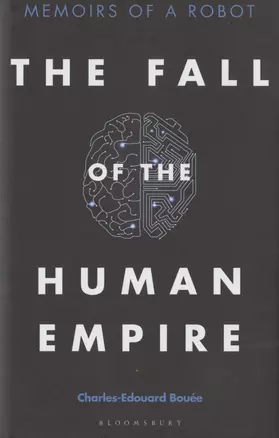
Two trends are coming together: exponential growth in the processing power of supercomputers, and new software which can copy the way neurons in the human brain work and give machines the ability to learn. Smart systems will soon be commonplace in homes, businesses, factories, administrations, hospitals and the armed forces. How autonomous will they be? How free to make decisions? What place will human beings still have in a world controlled by robots? After the atom bomb, is artificial intellig
Fall of the Human Empire
Этот товар закончился
Купили 4 человека
Описание и характеристики
The Fall of the Human Empire traces the little-known history of artificial intelligence from the standpoint of a robot called Lucie. She--or it?--recounts her adventures and reveals the mysteries of her long journey with humans, and provides a thought-provoking storyline of what developments in A.I. may mean for both humans and robots.
- Кол-во стр. 115
- Вес 310 г
- Год издания 2020
- Издательство Bloomsbury
- Размер 1.6x14.5x22.3
- ID товара 2783175
- ISBN 978-1-47-297003-9, 978-1-4729-7003-9